
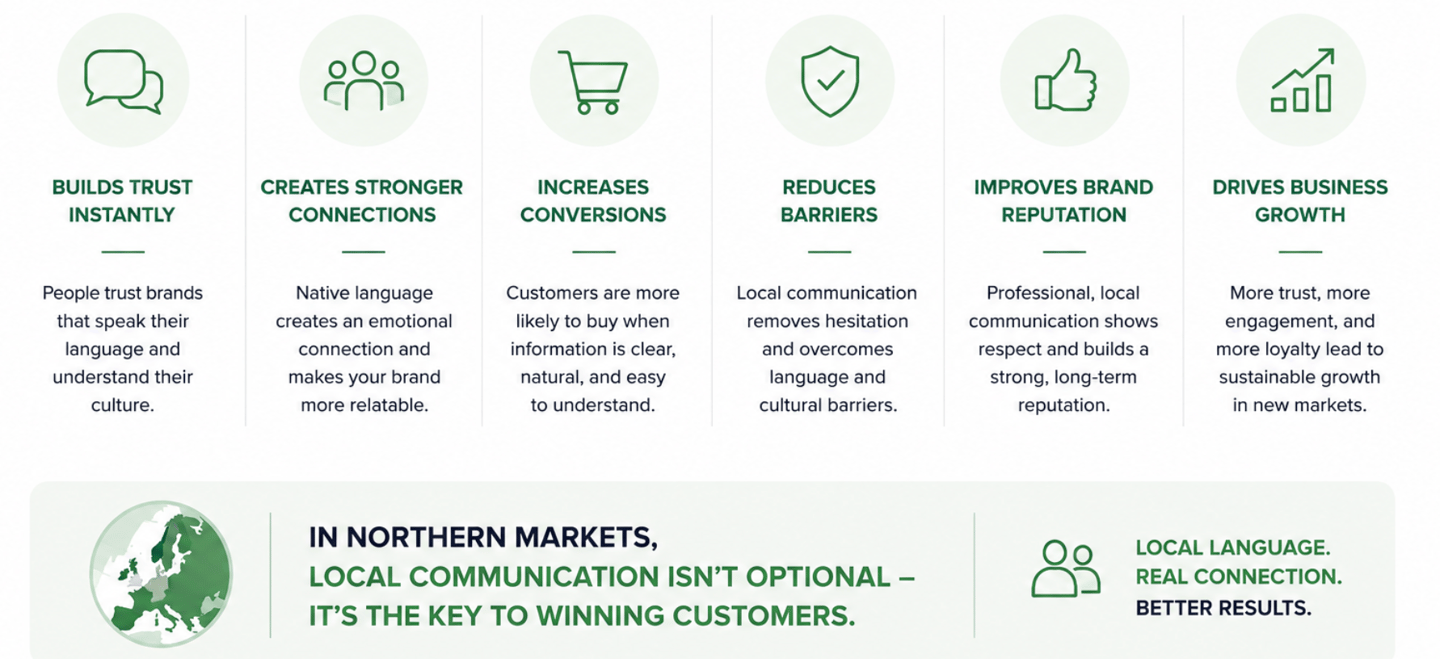
In Northern markets such as the Baltics and Scandinavia, local communication is not just a marketing advantage — it is often an expectation. 🌍🤝
Customers in these regions value trust, transparency, professionalism, and clear communication before making purchasing decisions, especially in e-commerce.
Even though English proficiency is high across countries like Sweden, Norway, Denmark, Finland, Estonia, Latvia, and Lithuania, consumers still respond more positively to brands that communicate in their native language. Local language creates familiarity, reduces hesitation, and makes the customer experience feel more personal and reliable.
Northern consumers are also highly detail-oriented and digitally experienced. They pay attention to how brands present themselves, how customer support responds, and whether communication feels authentic and culturally adapted. A poorly translated website or generic international messaging can quickly reduce trust and lower conversion rates.
Localized marketing in these markets means understanding:
communication tone and expectations,
local buying behavior,
preferred platforms and shopping habits,
seasonal trends,
and the emotional triggers that influence purchasing decisions.
For example, Scandinavian customers often value minimalism, transparency, sustainability, and long-term trust, while Baltic markets respond strongly to local relevance, fast communication, and personal customer care.


Native-speaking customer support and localized content also play a major role in reducing cart abandonment and increasing customer loyalty. When customers feel understood and supported in their own language, they are more likely to complete purchases, return again, and recommend the brand to others.
For international brands entering Northern Europe, success is rarely achieved through translation alone. The brands that grow fastest are those that adapt locally while maintaining a consistent global identity.